
How to Search Cabarrus County Court Records
The main tool is the North Carolina eCourts Portal. North Carolina put every county on one system, and Cabarrus went live in October 2024. The portal's Smart Search pulls a near real-time case summary the system calls the Register of Actions. The official Portal training page explains how Smart Search, Search Hearings, and NC Judgment Search work together.
You do not need an account to search. Before you start, have the party's full name or the case number ready. Case numbers have four parts: a two-digit year, case-type letters, a six-digit sequence number, and a three-digit county code. Chrome and Microsoft Edge are the recommended browsers.
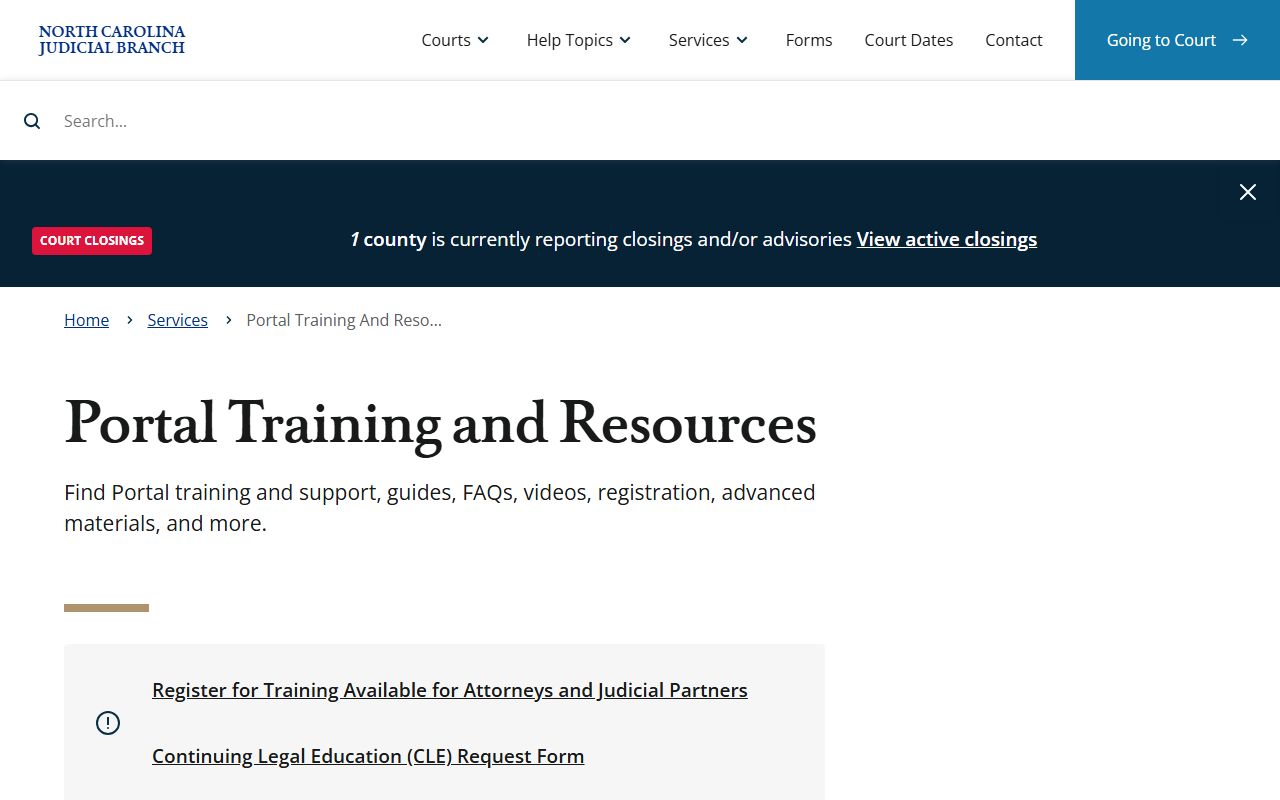
The training resources lay out each search type before you open the live portal. The steps below cover a basic Cabarrus County court records search.
- Open the North Carolina eCourts Portal.
- Use Smart Search. Enter a case number in the state format, or a party name.
- Open Advanced Filtering Options to narrow by Cabarrus location, case type, status, or filing date.
- Open the case summary and read the docket events, parties, and disposition.
- Request a certified copy from the Clerk of Superior Court if you need an official document.
Cabarrus County Court Records Search Fields
Smart Search is flexible, but the fields have rules. Name searches need at least three last-name letters and one first-name letter before a wildcard asterisk. A case-number wildcard needs four characters first. Party searches return all parties except victims. The table lists the fields you will use most for a Cabarrus court records lookup.
| Field Label | Type | Required | Notes / Format |
|---|---|---|---|
| Smart Search | Text | Yes | Defaults to case number or party name. |
| Case Number | Text | Optional | Format like 21CR000003-910; wildcard needs four characters. |
| Party Name | Text | Optional | Three last-name letters plus one first-name letter for wildcard. |
| Location | Dropdown | Optional | Select Cabarrus to limit statewide results. |
| Case Type / Status | Filters | Optional | Civil, criminal, estate, special proceeding. |
| Filing Date Range | Date | Optional | Narrows results by when the case was filed. |
The state's court records help topic also covers background checks and how the public uses these records.
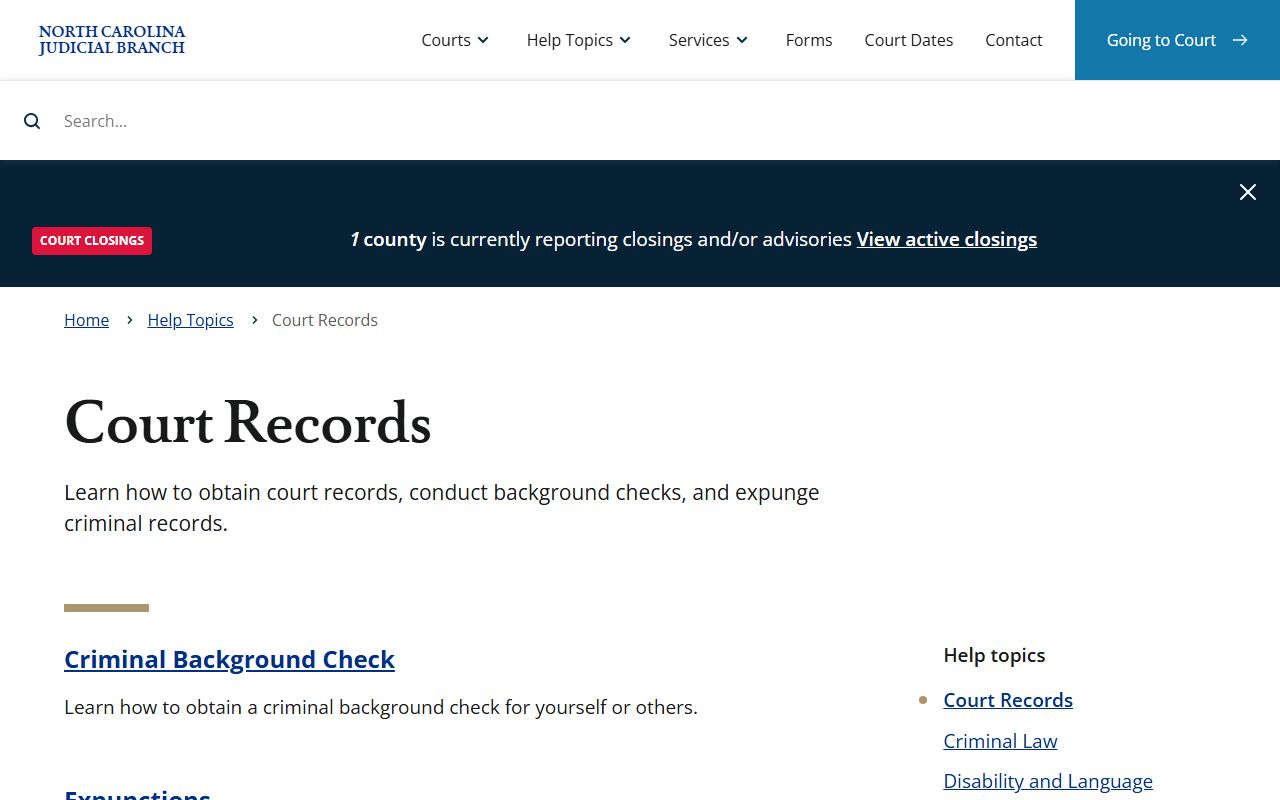
That help topic is a good first stop when you are unsure whether a record is public.
Types of Cabarrus County Court Records
Court records in Cabarrus County fall into a few main groups. Superior Court produces felony and large civil files. District Court produces the larger volume of misdemeanor, traffic, family, and small claims files. The Clerk of Superior Court also keeps probate and special-proceeding records. Most of these are public, though access depends on the case type.
The list below shows the common record types and where they come from.
- Criminal records - felony files in Superior Court; misdemeanors and infractions in District Court.
- Civil records - complaints, motions, orders, judgments, and writs.
- Family records - divorce, custody, child support, and protective orders.
- Probate and estate records - wills, administration, and guardianships before the Clerk.
- Small claims records - money owed, evictions, and possession heard by magistrates.
For traffic citations and infractions, see the traffic court records page. For arrests and bookings, see the arrest records page.
What Cabarrus County Court Records Show
A Cabarrus case file lists the events in a case from filing to disposition. The eCourts case summary, the Register of Actions, organizes these into sections that appear only when data exists. The fields below come from the state's description of a typical public case summary.
| Field | What It Shows |
|---|---|
| Case Number | Year, case-type letters, sequence number, and county code. |
| Case Type and Status | The division, category, and whether the case is open or closed. |
| Filing Date | When the case opened with the Clerk. |
| Parties | Plaintiffs, defendants, and attorneys, but not victims. |
| Causes of Action / Charges | Civil claims or criminal charges in the case. |
| Case Events | Docket entries listed in order. |
| Dispositions | The outcome of each charge or claim. |
| Financial | Costs, fines, and balances when they apply. |
The Clerk's record duties and public indexes come from statute. The clerk records statute, N.C.G.S. 7A-109, governs the record books and indexes the public may search.
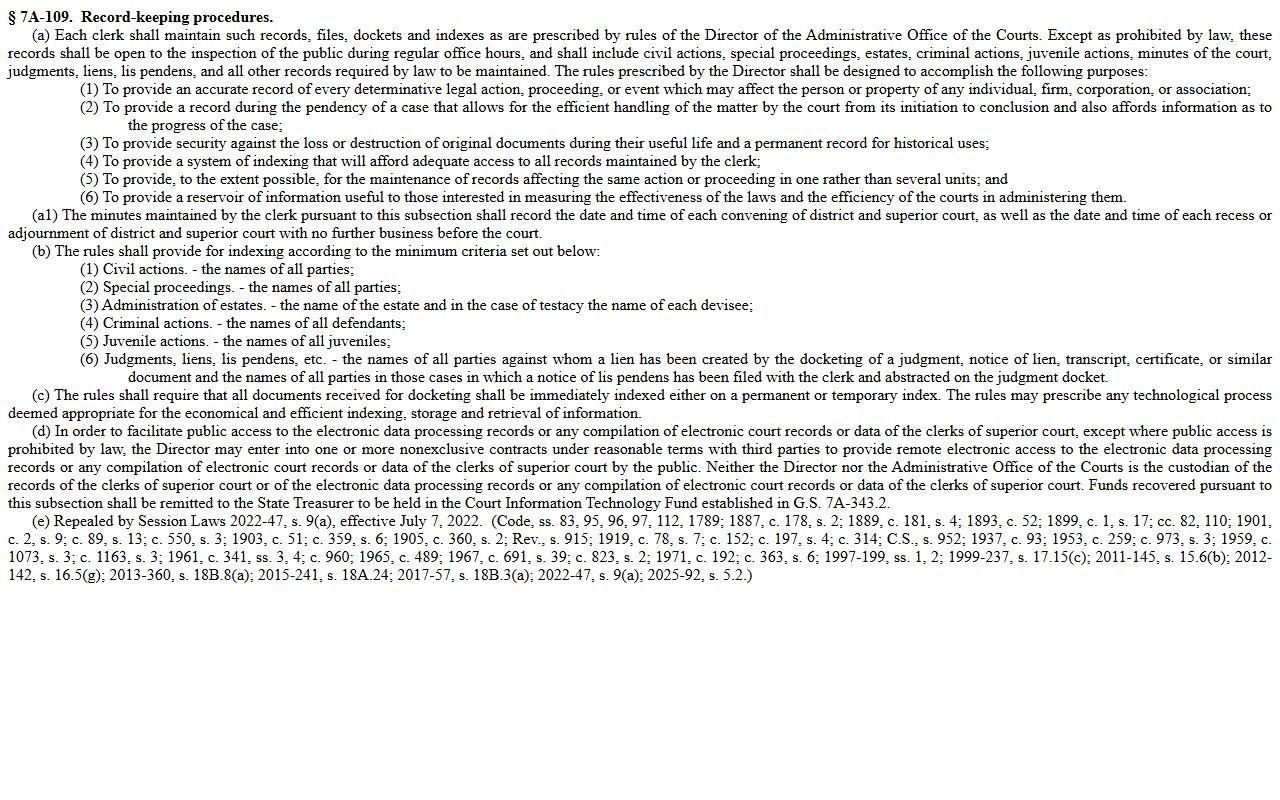
That statute is the backbone of which Cabarrus court indexes stay open to the public.
Public Access Framework for Cabarrus County Court Records
North Carolina treats most government records as open. The public-records law starts with Chapter 132 and its public-record definition in N.C.G.S. 132-1. Court files add their own layer under Chapter 7A. Any person can search public case information without giving a reason. The eCourts Portal provides public docket access, but the Judicial Branch states the Portal is not the official record.
Official copies come from the Clerk of Superior Court. Copy fees and court costs are set by statute. Private data, such as Social Security numbers, is kept out of public views, and the portal does not validate Social Security numbers for any user.
Note: The eCourts Portal shows public docket entries, but only the Cabarrus Clerk of Superior Court issues the certified, official court record.
Records That Are Sealed or Confidential in Cabarrus County
Some records never appear in a public search. Juvenile delinquency and abuse cases are restricted under Chapter 7B. The juvenile records statute, N.C.G.S. 7B-3000, limits access to parties, attorneys, agencies, and people with a court order.
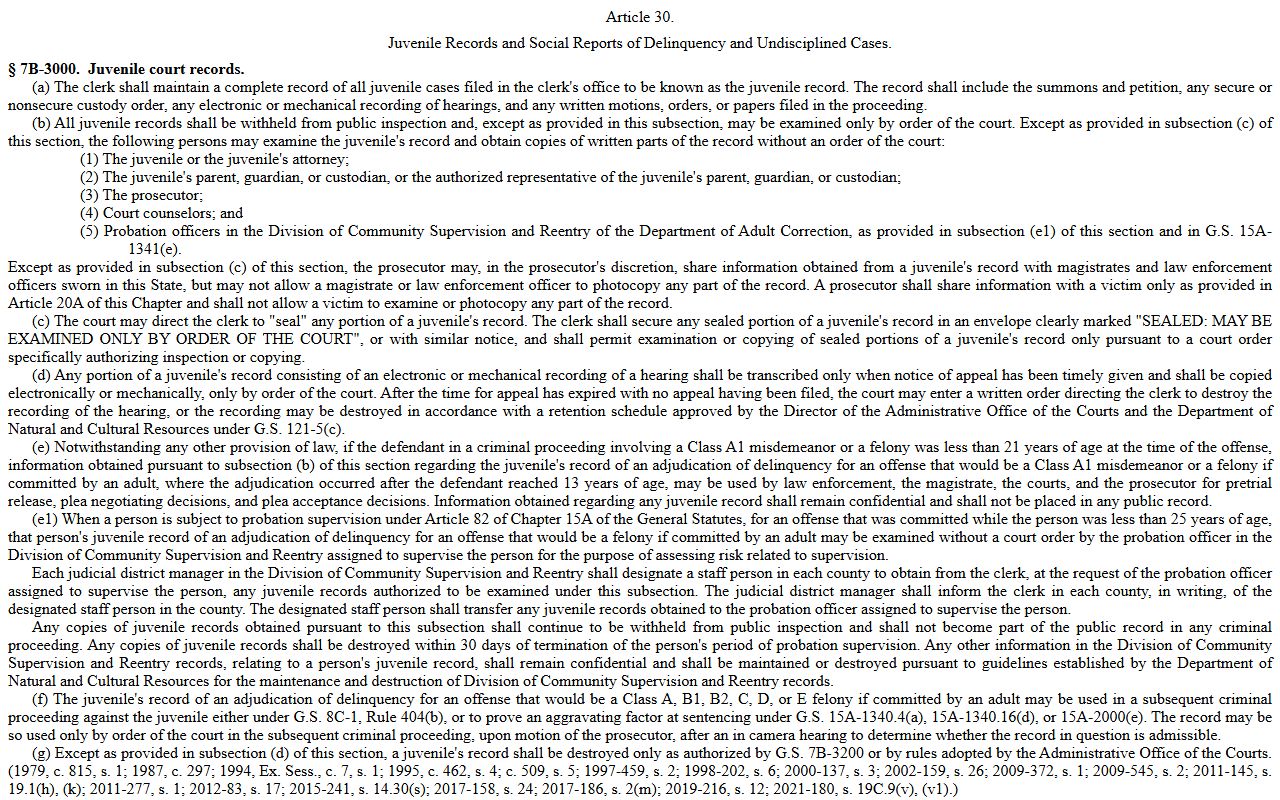
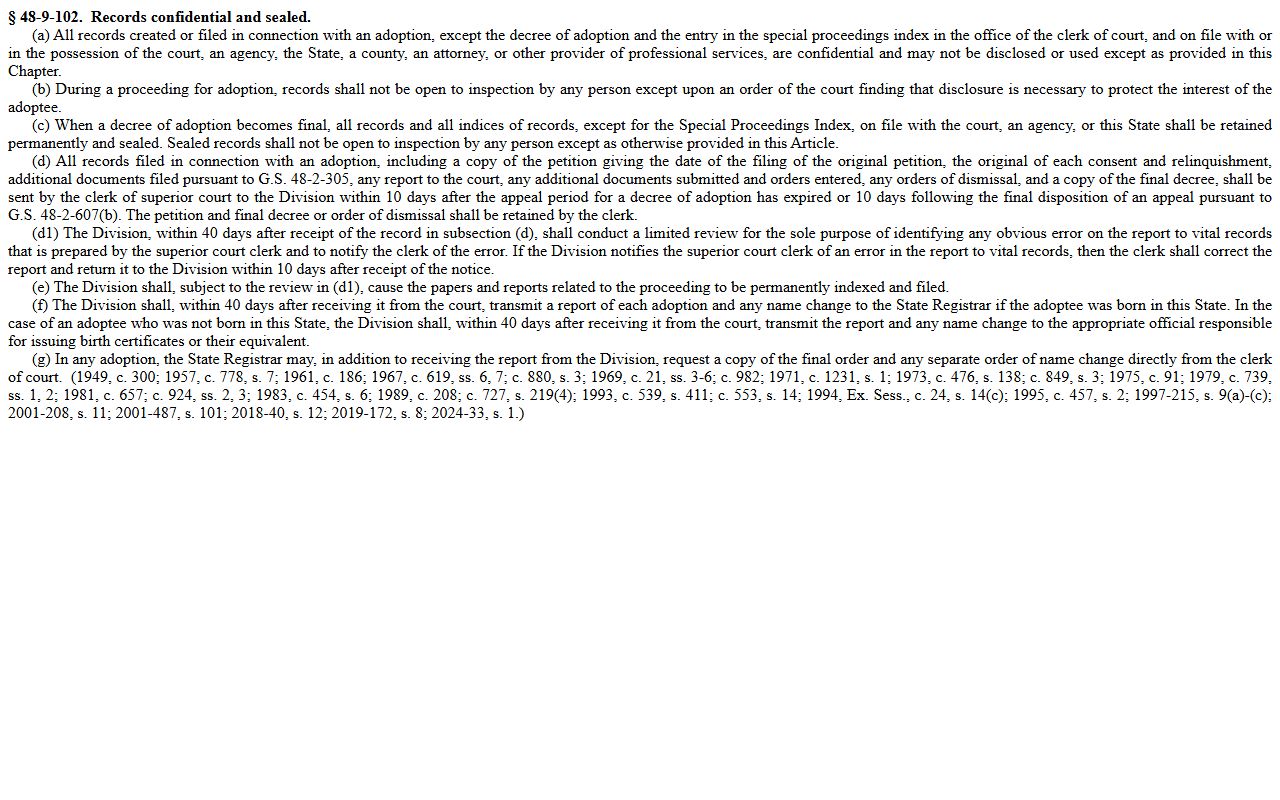
Juvenile files do not show up in ordinary Smart Search results. Adoption records are also confidential, sealed by Chapter 48 and its adoption confidentiality statute, N.C.G.S. 48-9-102.
Expunged records are a third group. An expunction seals or destroys eligible records of an arrest, charge, or conviction. The expunctions help topic lists eligibility, the filing steps, and the general $175 filing fee.
To view a sealed file, you usually need to be a party or hold a court order. The Clerk can explain local procedure but cannot give legal advice.
In-Person Court Record Requests in Cabarrus County
You can also visit the courthouse for records and certified copies. The Clerk of Superior Court works out of the Cabarrus County Courthouse in downtown Concord. Bring the case number if you have it, and a photo ID. Remember that cell phones are not allowed inside the courthouse, so plan how you will carry case details.
Clerk of Superior Court
61 Union Street South
Concord, NC 28025
704-262-5500
Mon-Fri, 8 AM-5 PM
Certified Copies and Court Costs in Cabarrus County
A printout from the eCourts Portal is fine for personal reference. It is not certified. For a record that will be used in court, for a passport, or for another official purpose, you need a certified copy from the Clerk of Superior Court. The Clerk stamps and signs the copy to show it matches the official file.
Court costs and copy fees in North Carolina are set by the General Assembly, mostly in Chapter 7A, Article 28. The Clerk collects the statutory amount rather than setting its own price. The state's court costs help topic links the current fee charts. Some criminal fees and fines can be paid online through the portal's Make Payments tool, while items like cash bonds and civil judgments cannot.
One more reminder on cost. An expunction petition carries a general $175 filing fee, though some dismissed or not-guilty expunctions have no fee unless the dismissal was tied to a diversion program.
How to read a Cabarrus case number
The case number does a lot of work. After the two-digit year, the letters reveal the case type. "CR" means the case includes at least one criminal offense. "IF" means infractions only. The three-digit code at the end is the county identifier. Reading the number first saves you from opening the wrong file.