
Cabarrus County Superior Court Overview
Superior Court is North Carolina's oldest trial court, set up in 1777. It hears felony criminal cases, civil disputes over $25,000, and appeals of misdemeanors and infractions from District Court. Superior Court judges rotate among districts every six months, a system meant to limit the conflicts that come with a permanent local assignment. A senior resident superior court judge handles administrative duties in each district.
Cabarrus County sits in Superior Court District 25, District Court District 25, and Prosecutorial District 25. The trial courts share the courthouse in downtown Concord, and the Clerk of Superior Court keeps the records for both divisions. North Carolina runs one unified General Court of Justice rather than separate county court systems, so there is no local Cabarrus court code. The same three divisions, Appellate, Superior, and District, apply across all 100 counties.
Cabarrus County Courts and Offices
North Carolina does not use numbered trial courts the way some states do. Instead, the county is served by Superior and District Court divisions, the Clerk, the District Attorney, and magistrates. The table lists the main court offices, their district, and contact details.
| Court / Office | District | Address | Phone |
|---|---|---|---|
| Cabarrus County Courthouse | Superior & District 25 | 61 Union Street South, Concord | 704-262-5500 |
| Clerk of Superior Court | Countywide | 61 Union Street South / PO Box 70 | 704-262-5500 |
| District Attorney | Prosecutorial 25 | PO Box 70, Concord | 704-262-5510 |
| Magistrate | District Court officer | Cabarrus County Courthouse | 704-262-5519 |
Superior Court vs. District Court vs. Magistrate
The two trial courts and the magistrate split the work by case size and type. Superior Court takes the serious matters. District Court handles the higher volume of everyday cases. Magistrates handle small claims and the first steps of criminal cases.
| Superior Court | District Court | Magistrate / Small Claims | |
|---|---|---|---|
| Civil Limit | Over $25,000 | $10,000 to $25,000 | Up to $5,000-$10,000 |
| Criminal Jurisdiction | Felonies | Misdemeanors, infractions | Initial proceedings, warrants |
| Family Cases | No | Yes | No |
| Jury | 12-member jury | Bench trial, no jury | No jury |
Small claims is part of District Court, heard by a magistrate, often without lawyers. The state's small claims guide explains the process.
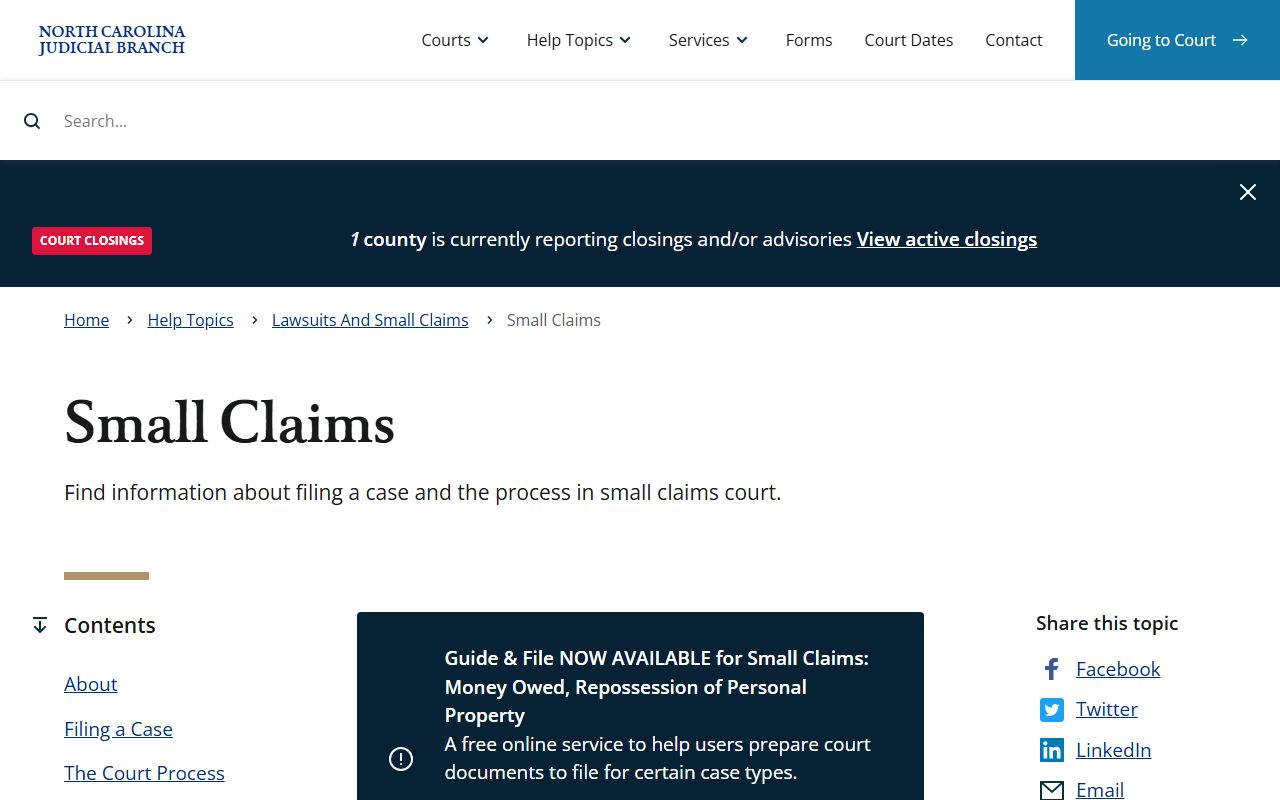
Small claims appeals move up to District Court for a new hearing.
How a Case Moves Through the Cabarrus County System
Cases follow a path from filing to judgment and possible appeal. Criminal and civil matters take different routes, but both can end at the Court of Appeals.
Criminal flow: Arrest › Magistrate / First Appearance › District Court › Indictment › Superior Court Trial › Sentencing › Court of Appeals
Civil flow: Complaint Filed › Answer › Discovery › Mediation › Trial › Judgment › Appeal
Many cases appeal from District Court to Superior Court for a new trial, depending on case type. Superior Court judgments generally appeal to the North Carolina Court of Appeals, and then potentially to the Supreme Court of North Carolina.
Civil, Family, and Criminal Divisions
The trial courts divide their work by subject. Superior Court civil files involve disputes over $25,000, complex claims, injunctions, and appeals. Superior Court criminal files cover felonies and appeals from District Court. District Court carries civil claims in the lower range, plus family, traffic, and misdemeanor work.
Family matters, like divorce, custody, child support, and domestic violence orders, are District Court cases. Cabarrus offers custody mediation through the court as well. The Clerk keeps the official records for every division, so a single case search can cross all of them.
This split matters when you search. A felony shows up as a Superior Court case, while a misdemeanor or traffic charge shows up in District Court. A large business dispute lands in Superior Court, while a landlord-tenant matter sits in District Court or small claims. Knowing the division narrows your search and helps you read the case number, where the letters after the year flag the case type.
Judicial District 25 in Cabarrus County
Cabarrus is part of District 25 across the trial system. It sits in Superior Court District 25, District Court District 25, and Prosecutorial District 25. The District Attorney for Prosecutorial District 25 is Ashlie Shanley, whose office prosecutes criminal cases in both trial divisions and prepares the criminal trial docket.
The structure is statewide, not local. Superior Court judges rotate among the districts in their division every six months, while the Chief District Court Judge sets the District Court schedule and supervises magistrates. Because the system is unified, a Cabarrus case follows the same statutes and rules as a case anywhere else in North Carolina, with the local Clerk keeping the file.
Recovery Courts and Specialty Programs
North Carolina runs problem-solving courts called Recovery Courts. They serve people in the criminal or juvenile system who have substance use, mental health, or co-occurring needs. Tracks include Adult, Family, Youth, Mental Health, and Veterans Treatment courts, each mixing judicial supervision with treatment and accountability.
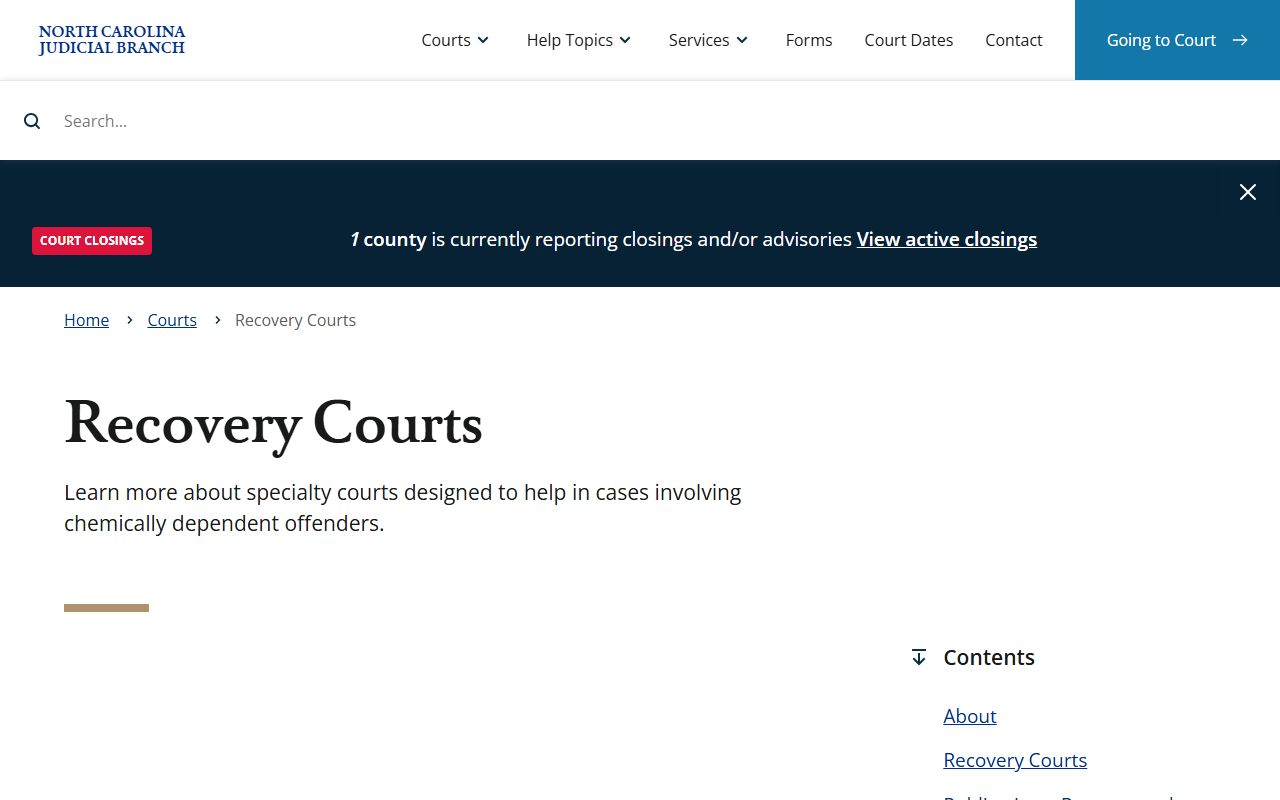
The state Recovery Courts page describes the model and its tracks. These programs supplement the regular trial courts rather than replace them.
Magistrates and Lower Courts in Cabarrus County
Magistrates are District Court officers who do a lot of the early and small-dollar work. In Cabarrus, a magistrate conducts initial criminal proceedings, sets conditions of release, issues some warrants, hears small claims and evictions, handles involuntary commitment duties, and performs civil marriages. The magistrate's office is reached at 704-262-5519.
Small claims is the lowest civil rung. A magistrate hears the case, usually without lawyers, and a losing party can appeal to District Court for a new trial. This gives residents a fast, low-cost path for disputes over money owed, evictions, and possession of property.
Federal Court for Cabarrus County
State courts handle most matters, but federal cases follow a separate track. Cabarrus County is served by the U.S. District Court for the Middle District of North Carolina. Federal crimes, federal-question civil cases, and bankruptcy run through that court, not the county courthouse.
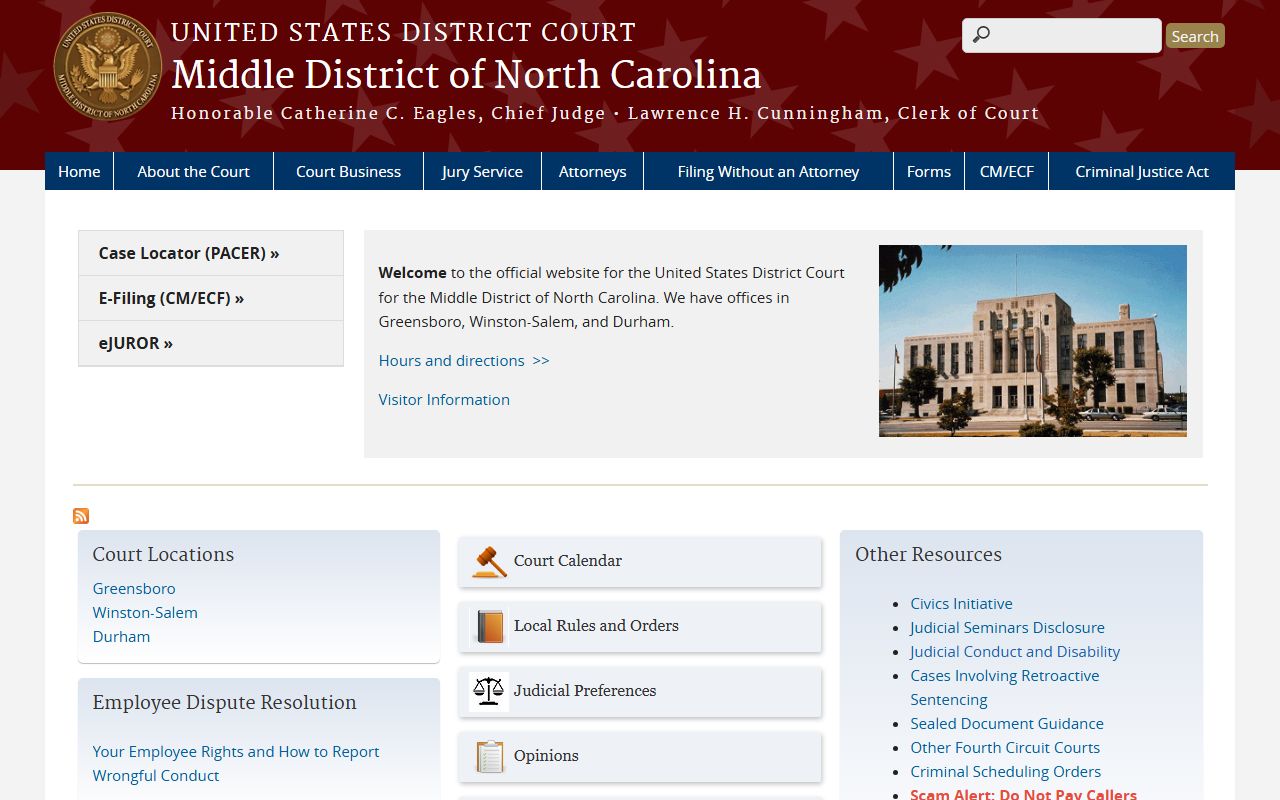
The Middle District of North Carolina is the federal trial court for the area. Federal case records are searched through PACER, the federal judiciary's access system.
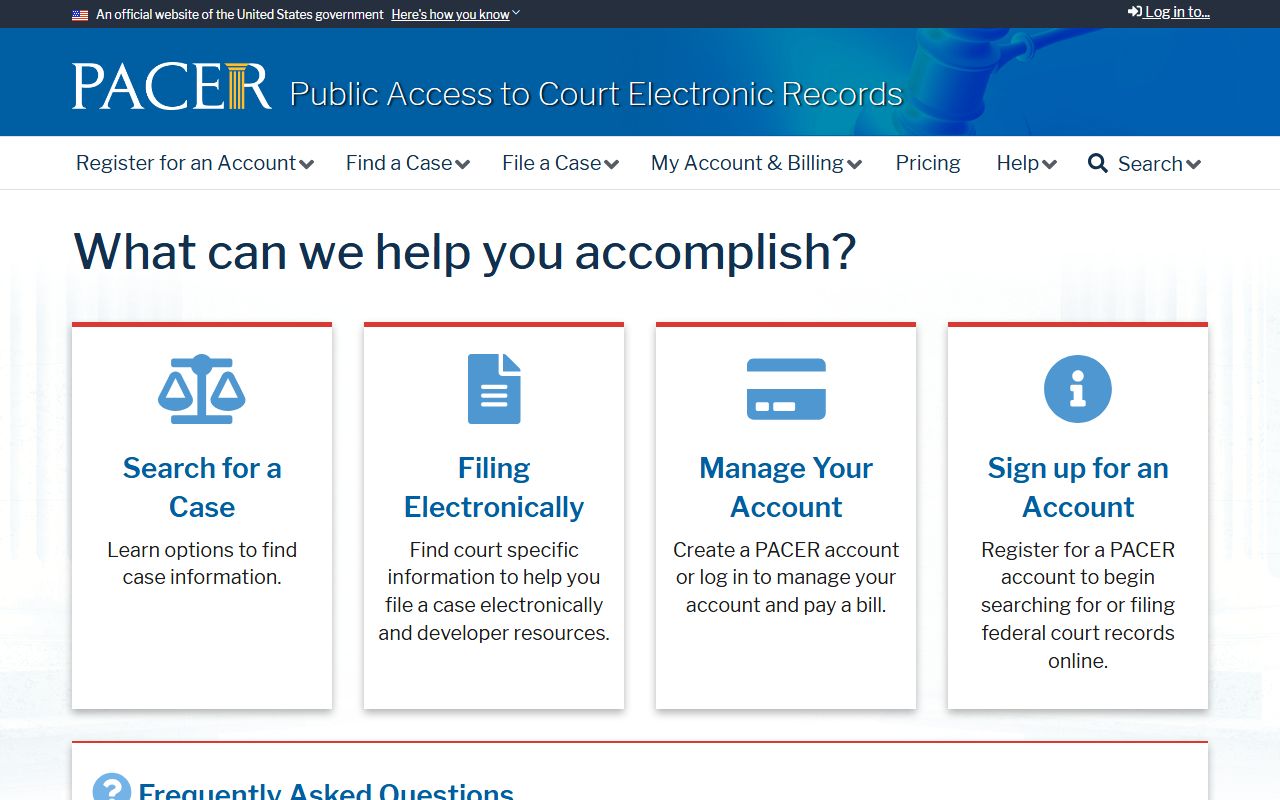
The PACER system provides federal docket access, which is separate from North Carolina's state eCourts Portal. Federal appeals from the district go to the U.S. Court of Appeals for the Fourth Circuit, and federal inmates are held by the Bureau of Prisons rather than the county jail. For most Cabarrus residents, though, the state Superior and District Courts handle the cases they will ever search.