
Active Warrants in Cabarrus County
Warrant authority in North Carolina is shared. The Clerk of Superior Court may issue arrest and search warrants in criminal matters. Magistrates conduct first appearances, set release conditions, and issue warrants as well. Once a warrant is signed, the Cabarrus County Sheriff's Office is responsible for serving it. The Sheriff runs the Detention Center at 30 Corban Avenue SE in Concord.
There is no public website that lists every open warrant in the county. Active warrants are law enforcement records, and listing them all would tip off the people named in them. The practical result is that a warrant becomes visible to the public mostly after it is served, when the person shows up on the jail roster or a new charge appears in court records.
This is why so many warrant searches feel like dead ends. The data exists, but it lives with the courts and the Sheriff until the warrant is acted on. A phone call to the right office, paired with a court record search, will tell you far more than any open database could.
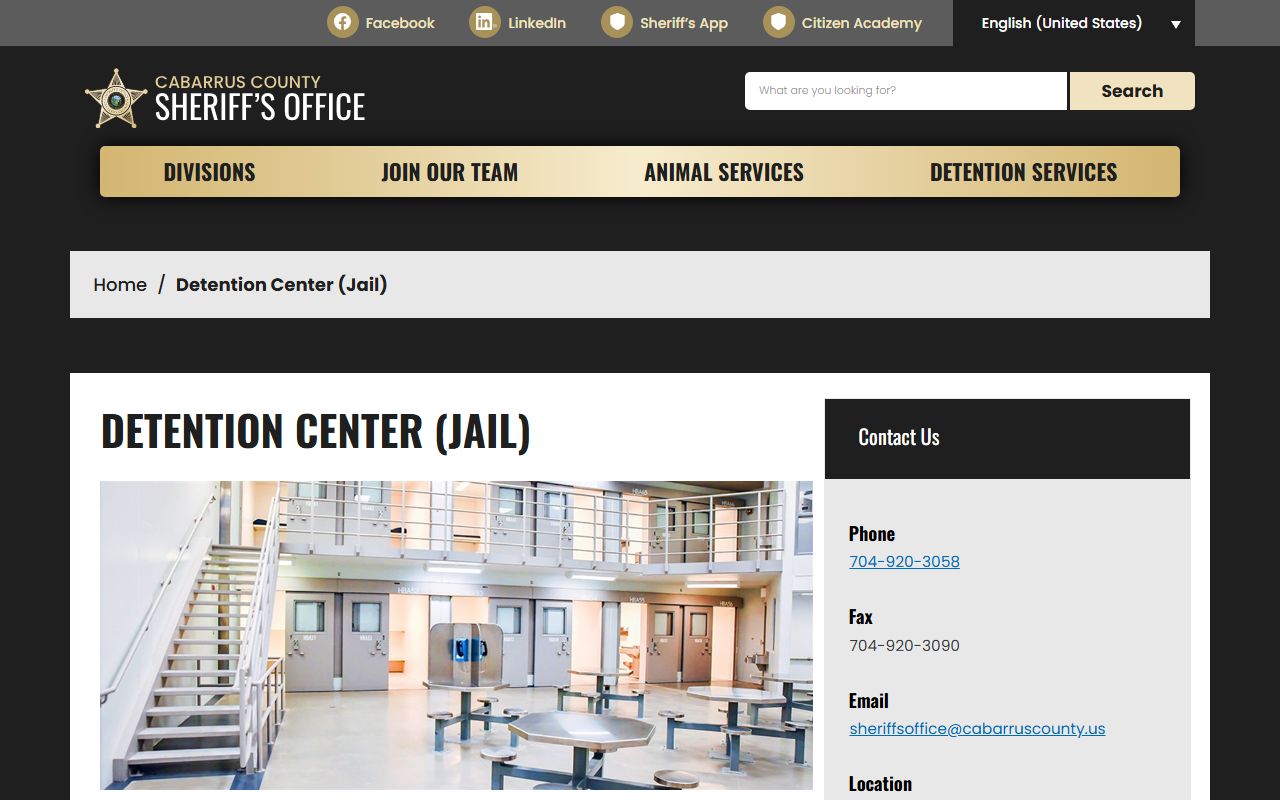
The Detention Center page links the inmate lookup, which is the fastest way to see if a warrant has already led to custody.
Types of Warrants in Cabarrus County
Not every warrant is the same. Some authorize an arrest. Some authorize a search. Others issue after a person fails to appear or breaks a court condition. Each type starts a different process.
- Arrest warrant - criminal process that authorizes police to take a named person into custody.
- Search warrant - authorizes a search of a specific place or property.
- Order for arrest - issues after a failure to appear, a probation issue, or contempt.
- Detainer or hold - keeps a person in custody for another agency, such as an immigration detainer.
Civil process is a separate track. The Sheriff also serves civil papers, but those are not criminal warrants.
How to Search Cabarrus County Warrants
Because there is no open warrant list, the best public tool is the Sheriff's P2C Inmate Inquiry. It cannot tell you about an unserved warrant, but it can confirm whether a warrant has already put someone in the jail. Searching court records can also reveal related criminal filings, though sealed warrants will not appear.
- Open the Cabarrus P2C Inmate Inquiry and search by name.
- If the person is in custody, open the detail to see charges, docket numbers, and bond.
- To confirm an unserved warrant, call the Sheriff at 704-920-3000, the magistrate at 704-262-5519, or the Clerk at 704-262-5500.
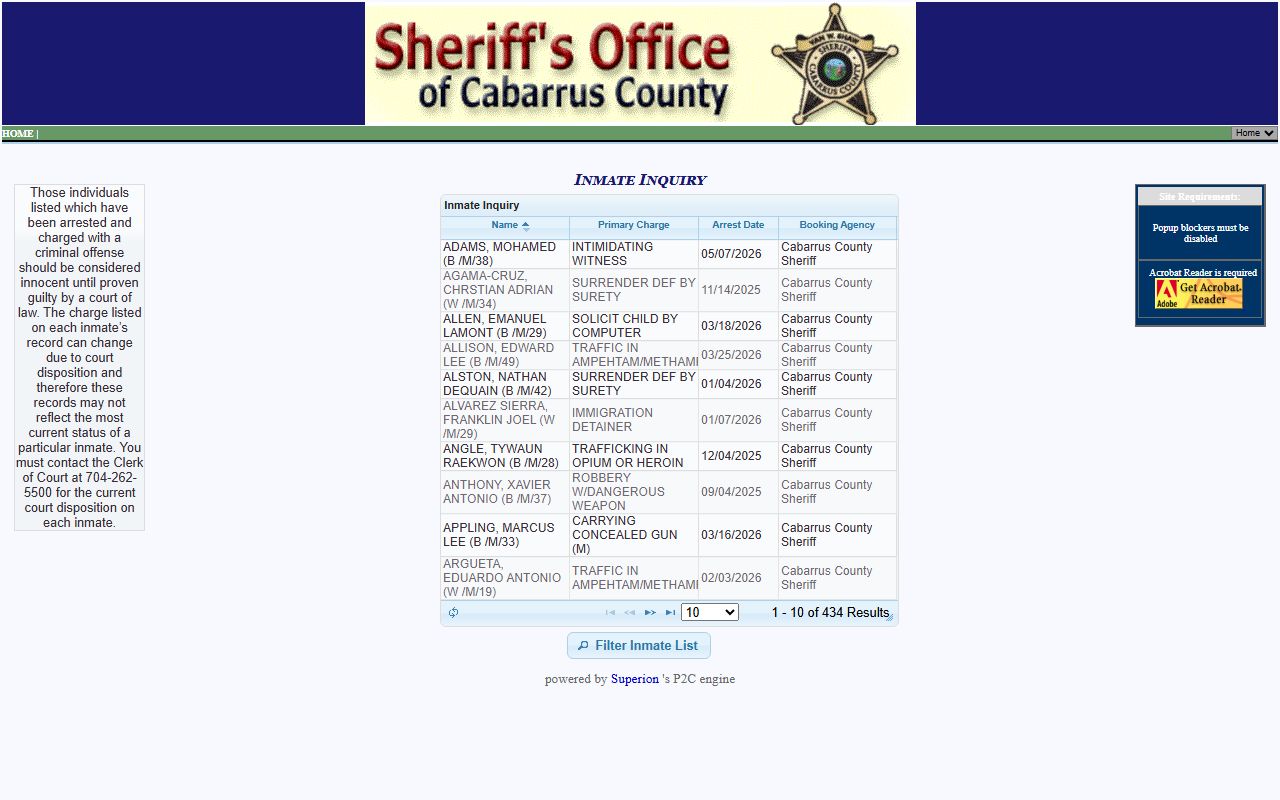
The roster confirms custody, not pending warrants, so calling the right office is still the surest way to learn about an open warrant.
Cabarrus County Warrant Search Fields
The public roster keeps its search simple. You enter a name and the grid returns matching inmates. The fields below are what the P2C lookup uses to confirm whether a warrant has led to a booking.
| Field Label | Type | Required | Notes |
|---|---|---|---|
| Last Name | Text | No | Main search field on the public roster. |
| First Name | Text | No | Narrows results when many share a last name. |
| Filter Inmate List | Grid filter | No | Filters the results by race, sex, age, or agency. |
What a Cabarrus County Warrant Record Shows
When a warrant or order leads to a booking, the related charge appears on the jail detail with a docket number and bond. A warrant document itself, held by the court, carries the fields below. Many of these are not exposed in any public lookup and must be obtained through the court.
| Field | What It Shows |
|---|---|
| Warrant / Docket Number | Ties the warrant to a court case file. |
| Issue Date | When a clerk or magistrate signed the warrant. |
| Charge | The offense named in the warrant. |
| Bond Amount | Secured, unsecured, or no bond, set per charge. |
| Issuing Court | The District or Superior Court behind the order. |
For current court disposition, the jail roster itself tells users to call the Clerk of Court at 704-262-5500.
Civil Process vs. Criminal Warrants
People mix up civil papers with criminal warrants. They are not the same. The Sheriff's Civil and Records division serves civil papers such as restraining orders, child support orders, divorce complaints, evictions, foreclosures, custody orders, and small claims actions. None of those are criminal warrants. Cabarrus offers an online tool to check the status of civil process.
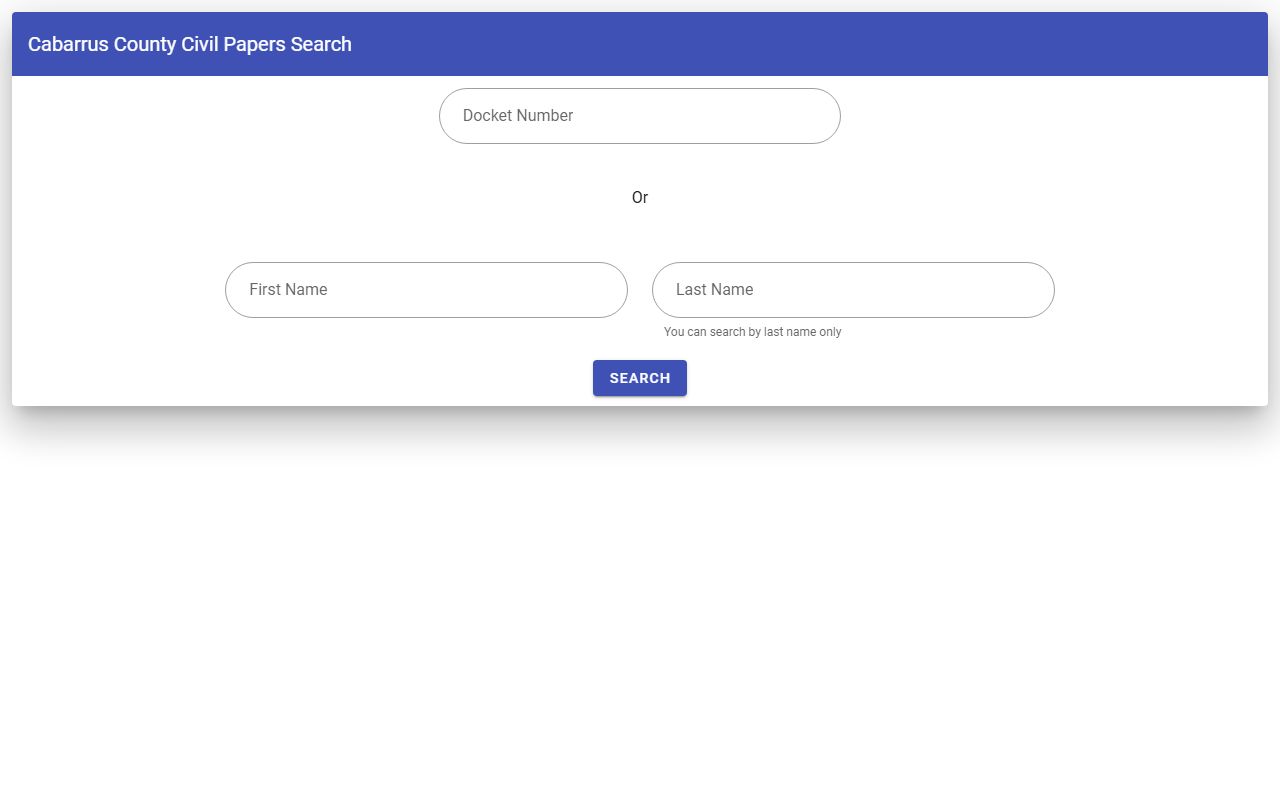
The civil papers search tracks the service status of civil documents, which is a different question from whether a criminal warrant exists.
Orders for Arrest and Failure to Appear
Many Cabarrus warrants start with a missed court date rather than a new crime. When a person does not show up, the case is marked called and failed. After 20 days, the court can issue a Failure to Appear, and some failures lead to an order for arrest. The court can also notify the DMV, which may suspend the driver's license until the case is resolved.
The good news is that these are often fixable. A person who missed court should contact the Clerk promptly and ask whether the case can be rescheduled. A judge can sometimes strike the failure to appear, set a new date, cancel the fee, and cancel a bond forfeiture. Bring proof of the reason you missed court if you plan to ask. Acting fast is what keeps a missed date from turning into an arrest.
What to Do If You Have an Outstanding Warrant
If you think a warrant is out for you, handle it with care. Do not trust third-party warrant websites. Call the official offices to confirm and ask what to do. If surrender is required, ask where to report, what ID is allowed, and whether bond can be posted. After arrest or surrender, a magistrate sets release conditions when allowed. Then verify your court date on the eCourts Portal and appear as ordered.
Important: Talk to an attorney before you turn yourself in on a criminal warrant, since the decisions made at first appearance can affect bond and the case.
Crime Stoppers and Anonymous Tips
The Cabarrus County Sheriff's Office links Cabarrus Crime Stoppers for anonymous tips. Tips help locate people wanted on warrants. Use the official Sheriff's website to reach the Crime Stoppers tip line rather than any third-party site. Do not attempt to serve or enforce a warrant yourself. That is the job of sworn law enforcement.
Restricted Cabarrus County Warrant Records
Several warrant records are not public. Sealed warrants tied to ongoing investigations do not appear in any lookup. Juvenile matters are restricted under state law. Federal warrants run through federal agencies, not the county. A separate but related public tool is the state sex offender registry, which lists people with reportable convictions after release.
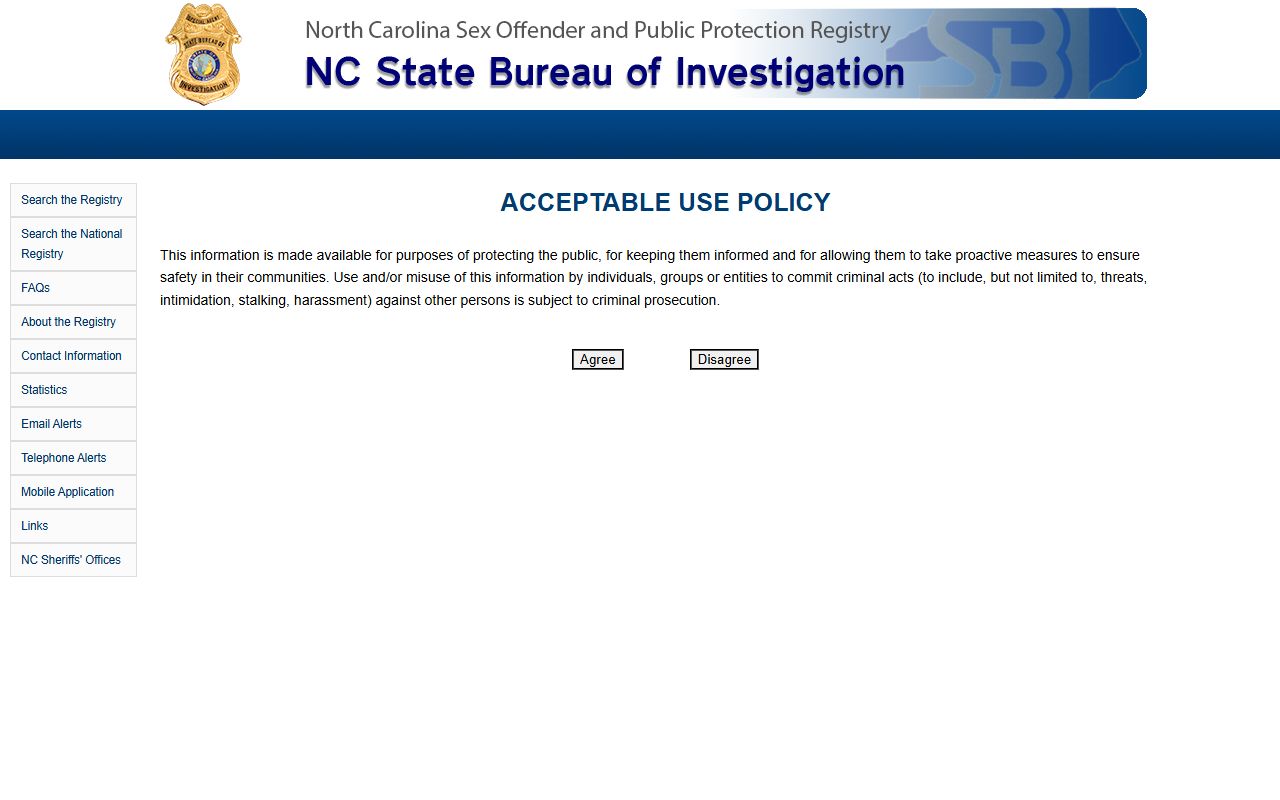
The NC SBI sex offender registry can be searched by name or by county, and it is separate from any warrant search.