
North Carolina Public Records Law
North Carolina's public records framework lives in Chapter 132 of the General Statutes. It defines public records broadly, covering documents, maps, photographs, electronic data, and other materials made or received in public business. The law presumes openness, so most county records are available unless a specific exemption applies. Cabarrus County cites Chapters 132 and 143 on its public records page.
Anyone can request a public record. You do not have to be a resident, and you do not have to explain why you want it. The county must allow inspection and provide copies, though it may charge to offset the cost of copying.
There is a real difference between court records and county administrative records, even though both are public. Court files follow the judiciary's rules and the eCourts Portal. County administrative records, like contracts and meeting files, follow the Chapter 132 request process. Sending a request to the wrong track is the most common reason a person waits longer than they should.
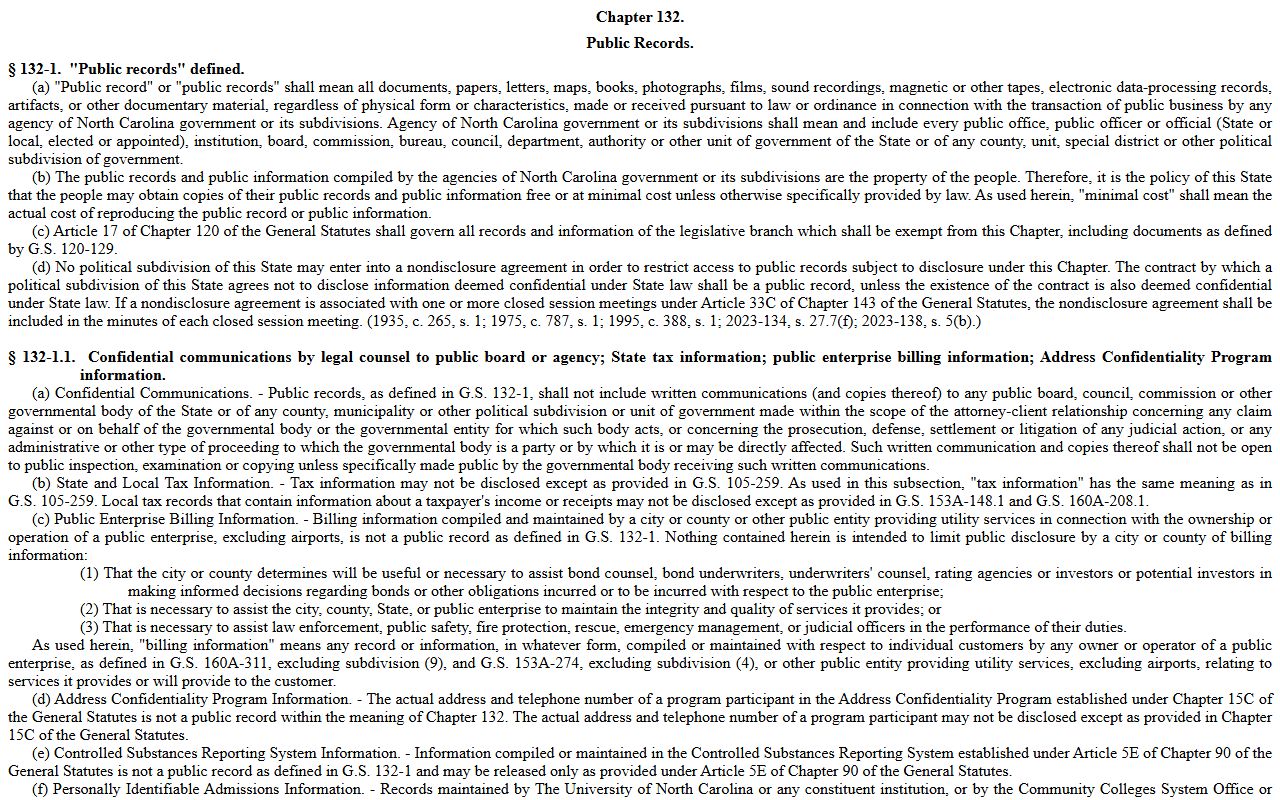
The full Public Records Law, Chapter 132, sets the rights and duties behind a Cabarrus records request.
What Records Cabarrus County Maintains
Different offices hold different records. Court files sit with the Clerk of Superior Court. Land and vital records sit with the Register of Deeds. General county government records run through the Board of Commissioners and County Manager. Knowing the split saves time.
- Land records - deeds, deeds of trust, plats, and assumed names at the Register of Deeds.
- Vital records - birth, marriage, and death certificates at the Register of Deeds.
- Court records - civil, criminal, family, and estate files with the Clerk of Superior Court.
- County government records - meeting records, contracts, and administrative files.
The Register of Deeds keeps land and vital records online, with indexes and images going back to the county's founding in 1792.
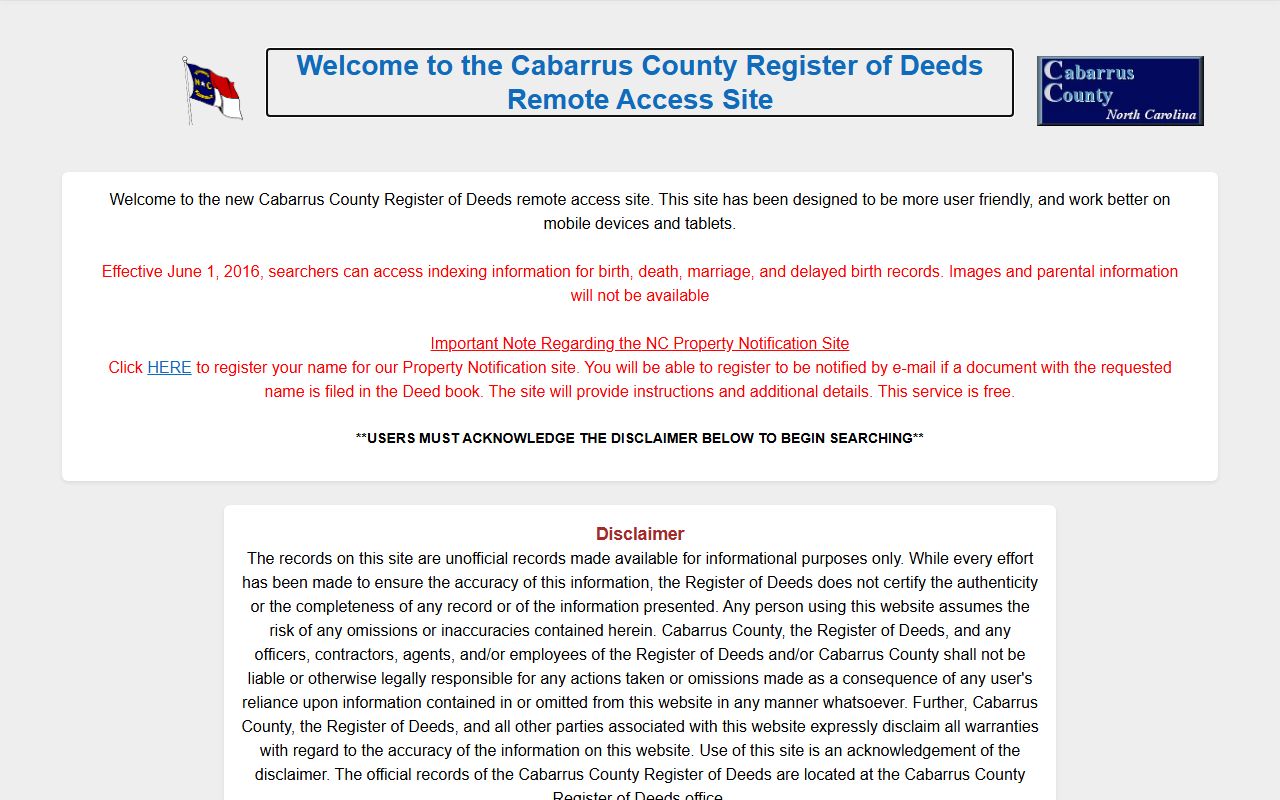
The Register of Deeds online records site carries those indexes and document images for public search.
How to File a Public Records Request in Cabarrus County
Cabarrus accepts public records requests online through a request portal called JustFOIA. The portal routes your request to the right department and tracks its progress. For records held by a specific office, like the Clerk or the Register of Deeds, contacting that office directly is often faster.
- Identify the office that holds the record you want.
- Describe the records clearly, with names, dates, or document types.
- Submit the request through the county's JustFOIA portal or to the office directly.
- Wait for the county to acknowledge and process the request.
- Pay any copying fees, then receive the records in your chosen format.

The JustFOIA portal is the county's online intake for public records requests.
Public Records Request Form Fields
A clear request gets a faster answer. The portal asks for your contact details and a description of what you want. The table lists the common fields.
| Field | Required | Notes |
|---|---|---|
| Requester Name | Yes | Used to reach you about the request. |
| Contact Info | Yes | Email or phone for follow-up and delivery. |
| Description of Records | Yes | Be specific: names, document type, and dates. |
| Date Range | No | Narrows a search and lowers labor cost. |
| Format Preference | No | Paper, electronic, or certified copy. |
Response Timelines
North Carolina law does not set a fixed number of days. Instead, it requires agencies to provide records promptly, or as soon as practicable. Complex or large requests take longer because staff must locate records and review them for any material that must be withheld. A narrow, specific request moves faster than a broad one.
If you have not heard back, follow up through the portal or call the office. A clear description and a reasonable date range help the county respond without delay.
Public Records Fees in Cabarrus County
The county may charge to offset the cost of copying, and the Register of Deeds has set fees for land and vital records under state law. The table below mixes documented Register of Deeds fees with the general rule for county copies.
| Item | Amount |
|---|---|
| County record copies | Copying fees may apply to offset county cost |
| Certified vital record | $10 |
| Uncertified vital copy by mail | $1 |
| Deeds and general instruments | $26 for the first 15 pages, $4 each added page |
| Non-standard document fee | $25 plus the recording fee |
Register of Deeds fees are set by state statute, including N.C.G.S. 161-10.
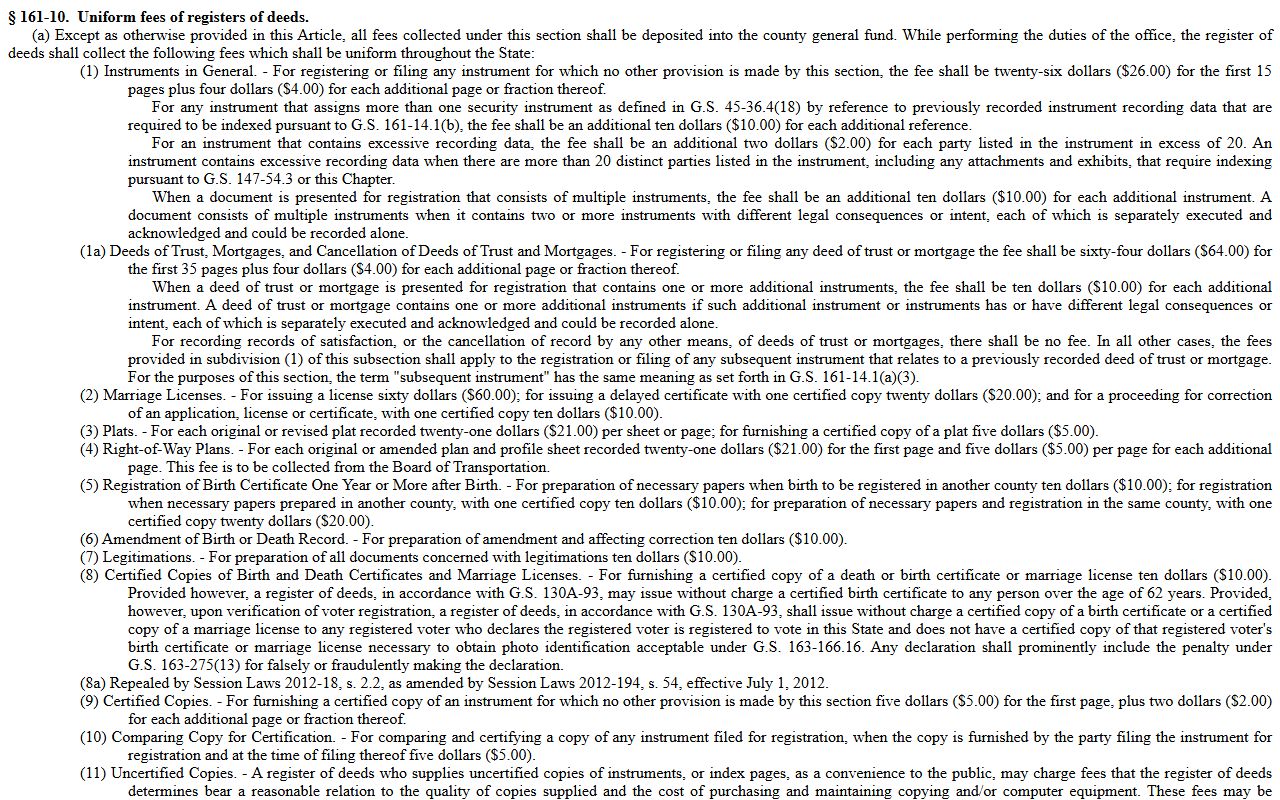
That statute is why the Register's fees are fixed rather than set locally.
Recording Standards for County Documents
If you file a document to be recorded, formatting matters. North Carolina sets standards for recordable documents. They must be on letter or legal paper, use black ink on white paper, keep a three-inch top margin on the first page and half-inch margins elsewhere, use a font no smaller than 10-point, print one-sided, and show the instrument type at the top. Miss the standard and the office can charge a $25 non-standard fee on top of the recording fee.
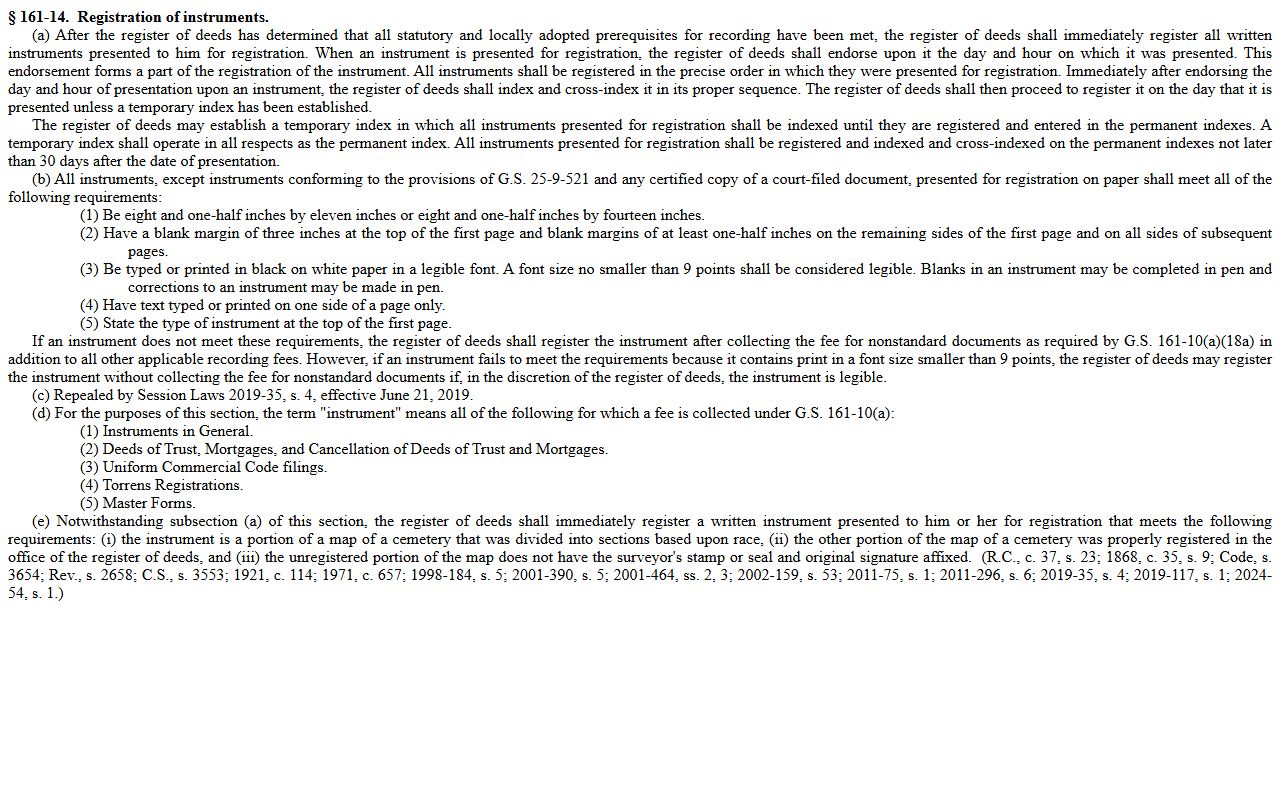
The formatting rules come from N.C.G.S. 161-14, which the county follows when recording documents.
Records That Are Exempt
Not everything is open. Some records are confidential by statute even though most county records are public. Examples include juvenile court files, adoption records, certain personnel data, and personal identifying information like Social Security and driver's license numbers, which are redacted from internet records. Active criminal investigation files can also be withheld.
When the county withholds part of a record, it should point to the law that allows it. Often the office can still release a redacted version with the protected details blacked out. If you think a denial is wrong, ask the office to explain its legal basis before you take any further steps.
If Your Request Is Denied
If the county denies a request, ask which statute supports the denial and whether a redacted copy is possible. North Carolina's public records law lets a requester challenge an improper denial, and the dispute can move to court if it is not resolved. Many denials, though, come from a vague request rather than a true exemption, so try refining the description first. The Board of Commissioners public records page is the official starting point for county requests.
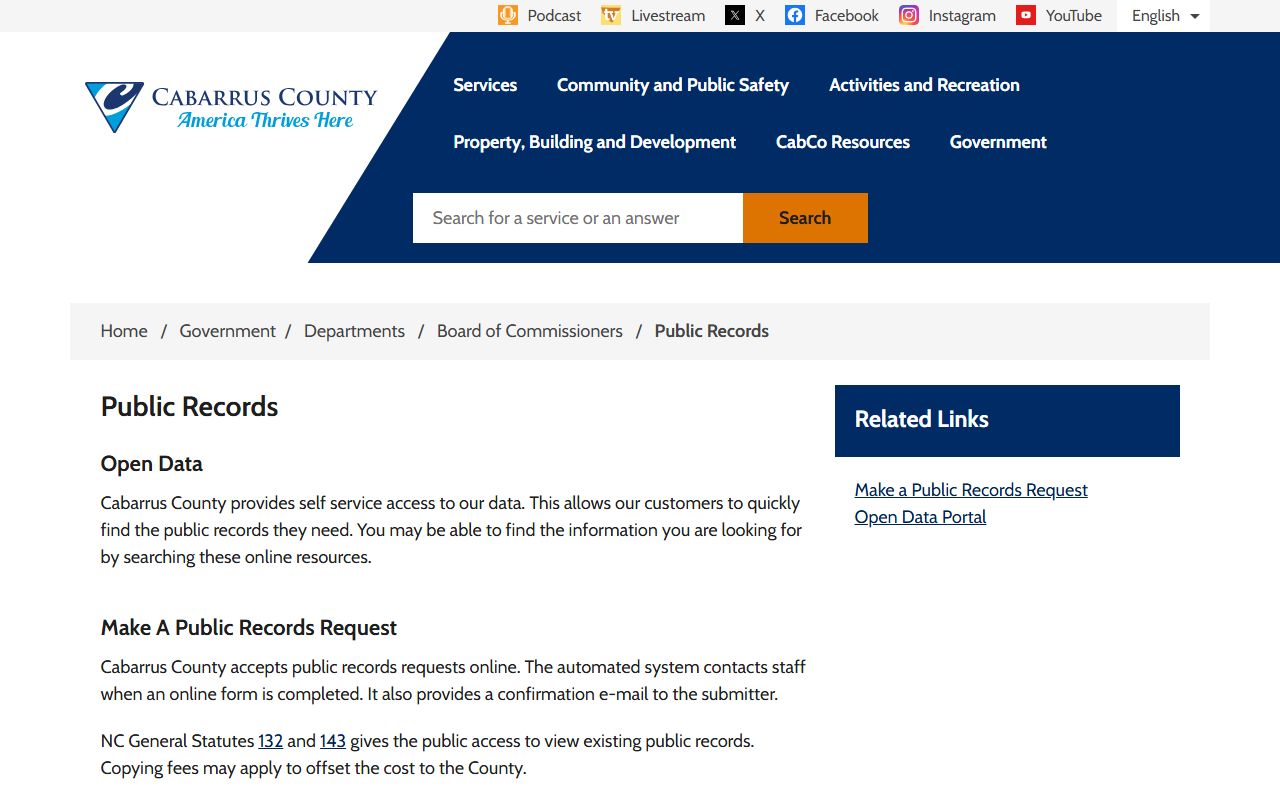
The county public records page explains the request process and links the online portal.