
What Probate Covers in Cabarrus County
Probate is the court process for handling a person's estate. It includes proving a will, appointing someone to settle the estate, and overseeing the payment of debts and the distribution of property. It also covers guardianships for incompetent adults and estates for minors. In North Carolina, the Clerk of Superior Court is the probate judge, so Cabarrus probate filings go through the Clerk's office at the courthouse.
Estate work is detailed. It can involve wills, applications, letters of administration, inventories, accountings, creditor notices, and final distributions. The Clerk also handles small estates, trust matters in some cases, and special proceedings tied to property. If someone challenges the validity of a will in a caveat proceeding, that contest is heard by a Superior Court judge rather than the Clerk.
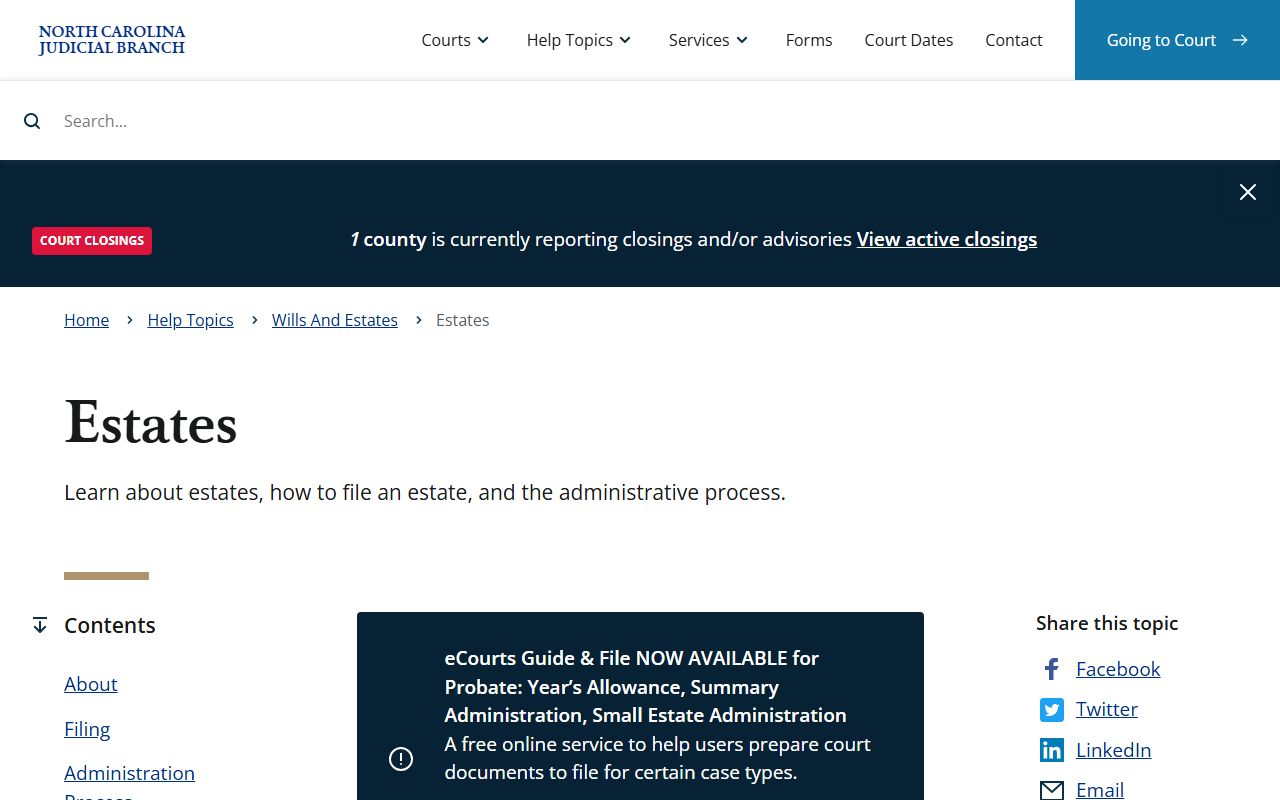
The state estates help topic confirms the Clerk of Superior Court acts as probate judge in each county.
Probate Terms Defined
Probate filings use words that confuse most people the first time they open an estate file. A short glossary helps before you read one.
- Testator
- The person who made the will.
- Executor
- The person named in a will to settle the estate.
- Intestate
- Dying without a valid will, so state law decides who inherits.
- Personal Representative
- The person the Clerk authorizes to administer an estate.
- Guardianship
- A court arrangement to manage the affairs of an incompetent adult or a minor.
- Heirs
- People entitled by law to inherit when there is no will.
How to Search Cabarrus County Probate Records
Estate cases are searchable through the North Carolina eCourts Portal, the same system used for other court files. Use Smart Search, then narrow to estates. Older or paper records may only be available at the courthouse, so the Clerk's office can help when an online search comes up short.
- Open the North Carolina eCourts Portal and use Smart Search.
- Enter a case number or party name, and select Estates under Advanced Filtering.
- Choose Cabarrus as the location, then review the estate file events and parties.
For certified copies or older estate files, contact the Cabarrus Clerk of Superior Court at 704-262-5500. Staff can point you to the right form and explain local procedure, but they cannot give legal advice or help you draft documents.
Probate Court in Cabarrus County
There is one probate authority in Cabarrus County: the Clerk of Superior Court, sitting as probate judge at the courthouse in downtown Concord. The office takes wills, opens estates, and oversees guardianships. Remember that cell phones are not allowed inside the courthouse, so plan ahead for any in-person visit.
Clerk of Superior Court, Estates Division
Cabarrus County Courthouse
61 Union Street South
Concord, NC 28025
704-262-5500
Mon-Fri, 8 AM-5 PM
Cabarrus County Probate Filing Fees
Estate and probate fees in North Carolina are set by statute, not by the county, so the Clerk collects the amount the law requires. Costs in estate matters come from N.C.G.S. 7A-307, and other clerk civil costs come from N.C.G.S. 7A-308. Because the dollar figures are set in the current court costs chart, confirm the exact amount with the Clerk before filing.
| Item | Amount |
|---|---|
| Estate court costs | Set by N.C.G.S. 7A-307 |
| Clerk civil and special proceeding costs | Set by N.C.G.S. 7A-308 |
| Certified copy | Confirm with the Clerk's office |
| Guardianship filing | Set by current NCAOC court costs chart |
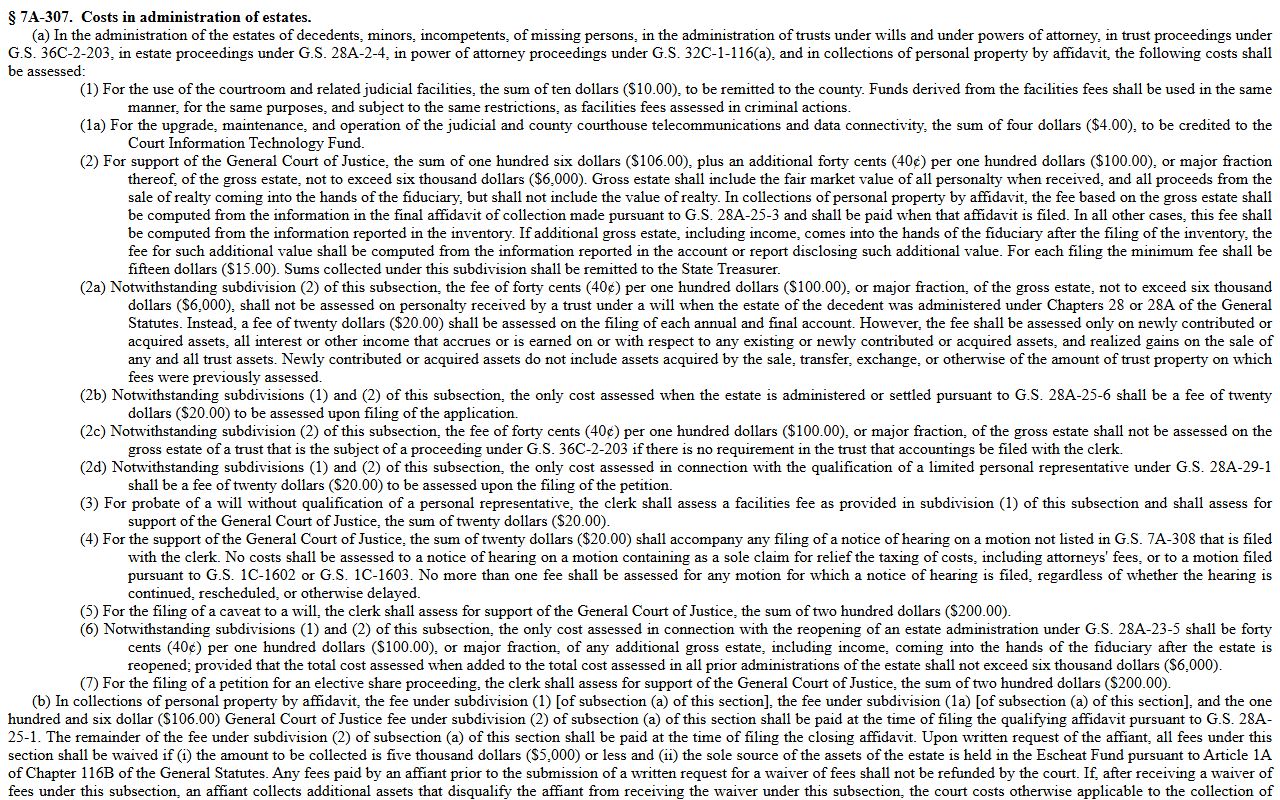
The estate costs statute governs the fees the Clerk collects when opening and administering an estate.
What Cabarrus County Probate Records Show
An estate file builds over the life of the case. It can include the will, the application to administer, the letters that authorize the personal representative, an inventory of assets, accountings, creditor notices, and the final distribution. A will has no legal effect until it is probated, and it becomes a public record once the person dies and the will is filed with the Clerk.
Most of these records are public. Any person may view a public estate record or request a copy for a fee. The public-records foundation comes from N.C.G.S. 132-1, which defines public records broadly.
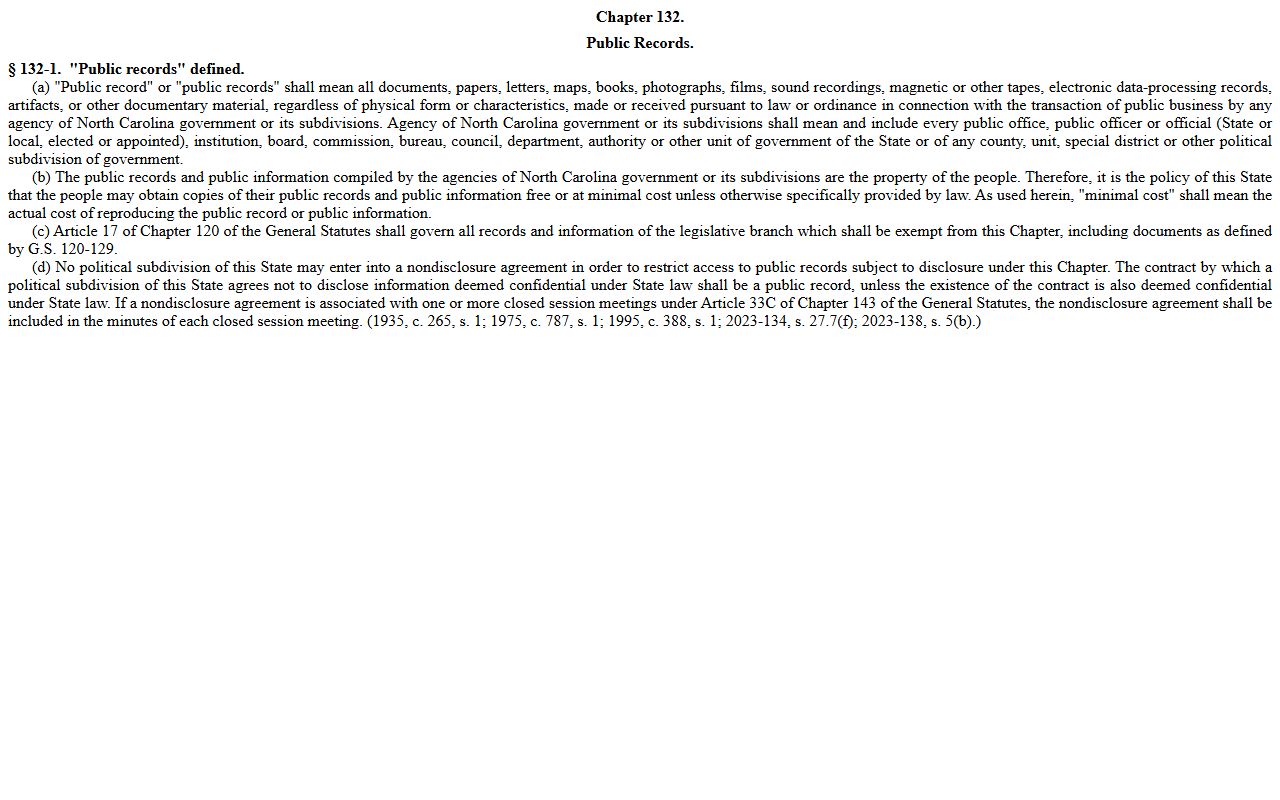
That definition is why a filed will and most estate filings are open to the public in Cabarrus.
Restricted Cabarrus County Probate Records
Not every probate-related record is fully open. Guardianship and incompetency matters can carry confidentiality limits, so the Clerk should be asked before assuming a file is public. Personal identifying information is also protected. Social Security and driver's license numbers are redacted from internet records under N.C.G.S. 132-1.10.
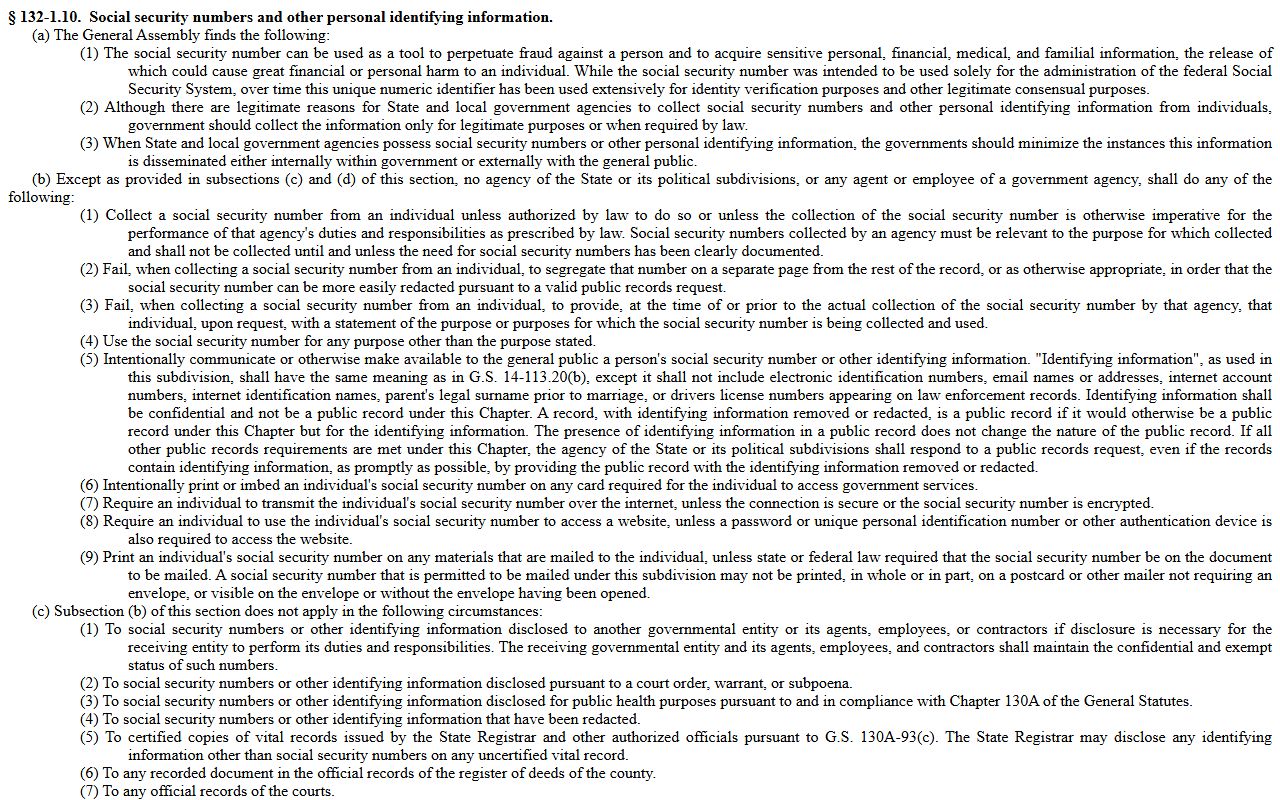
That redaction rule keeps private numbers out of public estate records, even when the rest of the file is open. The clerk civil costs statute below also governs special-proceeding filings tied to estates.
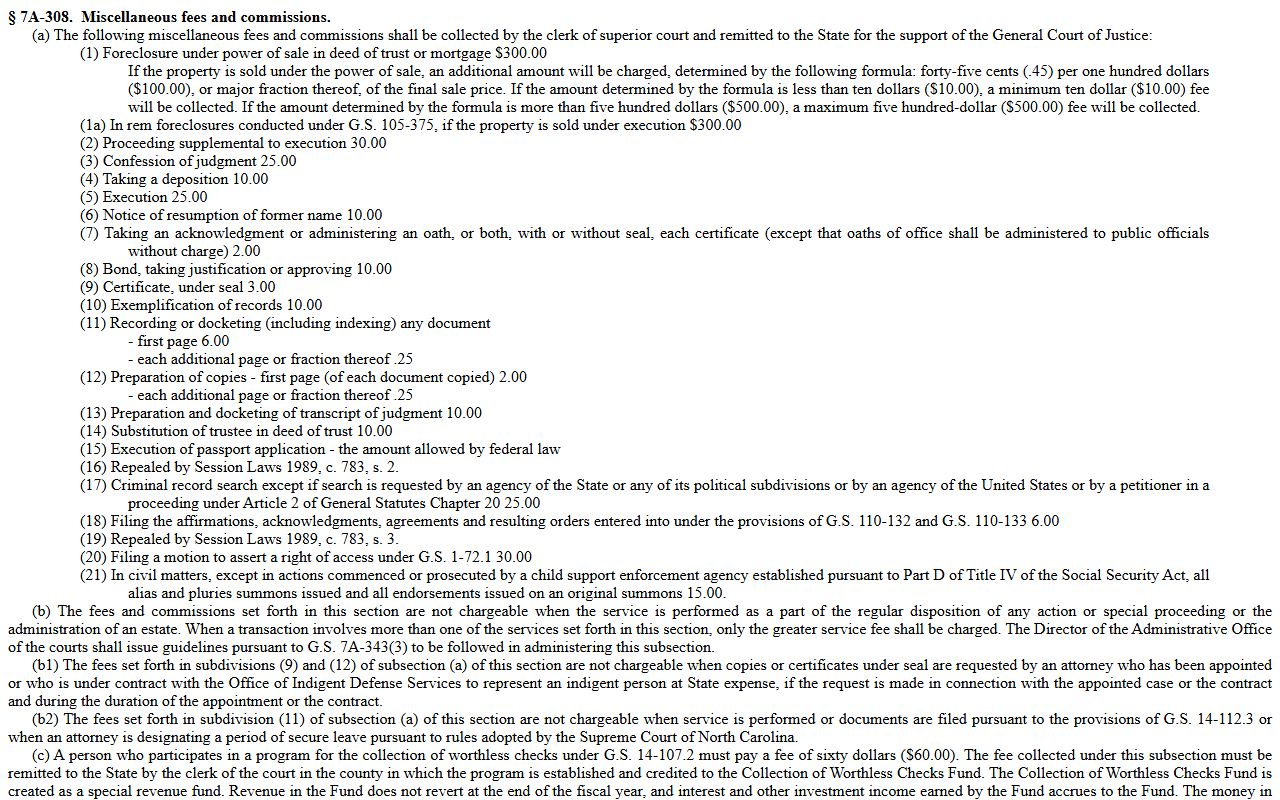
The clerk civil costs statute applies to many special proceedings the Clerk handles alongside estates.
Wills, Public Access, and Caveats
A will is private during a person's life. It carries no legal effect until it is probated. Once the person dies and the will is filed with the Clerk, it becomes a public record that anyone may read or copy for a fee. That is why estate searches so often turn up a will: the death and the filing make it public.
Sometimes a will is disputed. When someone challenges whether a will is valid, the dispute is called a caveat. A caveat is not decided by the Clerk. It is heard by a Superior Court judge, which moves that part of the estate into the trial court. The rest of the estate work stays with the Clerk acting as probate judge, so a single estate can touch both offices.
How Probate Works in Cabarrus County
Probate follows a set order. Knowing the steps helps you find the right record at the right stage.
- Determine whether the decedent lived in Cabarrus or owned property here.
- File the original will, if one exists, with the Clerk of Superior Court.
- Apply for the right estate administration procedure.
- The Clerk reviews documents and issues authority if requirements are met.
- The personal representative inventories assets and gives creditor notice.
- Valid debts, taxes, and expenses are paid, remaining property is distributed, and a final accounting closes the estate.